


Family Background
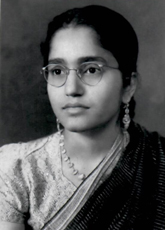 Leela Moulik
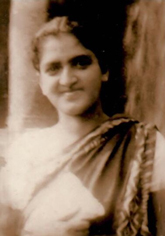 Bela Mazumdar
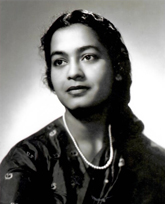 Aloka Moulik
Chatterjee
Mother - Leela Mazumdar Moulik, B.A.
Leela grew up in Dhaka (then part of India, now Bangladesh) where her father was a member of the judiciary and a wealthy zamindar. She had her education at Kamarunissa College in Dhaka. She obtained a Bachelors degree in Sanskrit, Indian History, Bengali and English Literature and Logic. Leela and her younger sister Bela received music lessons and were taught Robindra Sangeet at their Dhaka mansion. Later she received a Diploma in World History from a Washington College. Soon after taking her B.A degree aged 18, she was married to Dr Moni Moulik who had just returned from Italy where he was a foreign correspondent for Indian newspapers as well as a lecturer in Indian history and Sanskrit at the Oriental Institute. After Indian Independence she travelled widely with her diplomat husband who was posted at the Indian missions in Washington, New York, Tokyo, and London. Thereafter she lived with her husband in Rome for eighteen years where he was a senior Director at the Food and Agricultural Organization. Here she studied Roman history and the Renaissance civilization in Italy. After her husband's retirement they settled in their beautiful home in Shantiniketan and became a devotee of Shri Ramakrishna Paramahamsa. She passed away at the age of 53, leaving her family shattered.
Leela Mazumdar Moulik and her younger sister Bela Mazumdar co-authored a book on the greatest Bengali novelist Bankim Chandra Chattopadhyay and India's greatest poet Gurudev Rabindranath Tagore which was translated from the Bengali to English by Leela's daughter Aloka. These were incorporated into a book "Profiles of Courage in Indian and Russian Literature" published posthumously in July 2019.
This book "Portraits of Courage in Indian and Russian Literature" narrates the lives and creative works of Alexander Pushkin, Bankim Chandra Chattopadhyay, Rabindranath Tagore and Alexander Solzhenitsyn. The authors describe the courage and intellectual integrity of the four great writers who rebelled against oppression, foreign rule and championed the downtrodden.
Leela's younger sister Bela Mazumdar had her school education in Dhaka but left their ancestral home when the Partition made East Bengal a part of Pakistan. She went to live in Calcutta with her elder sister Leela and joined a college in Calcutta. There she learned dancing and singing. Soon after Independence, Bela went to live with her elder brother in Washington, D.C. There she studied history and literature. Homesick in Washington, Bela began writing poems and articles in Bengali. Her long article on Rabindranath has been translated by her niece Aloka and forms part of the book "Portraits of Courage in Indian and Russian Literature." Justin, a young lecturer in Bela's college fell in love with her. He became interested in India and together they discussed prospects for the new India. They were engaged to be married and made plans for the future. But that dream did not fructify. Bela contracted tuberculosis and died after a lung surgery. She was only twenty-five. A year later, Justin was drafted to the US army to fight in the Korean War. Leela did not meet him again.
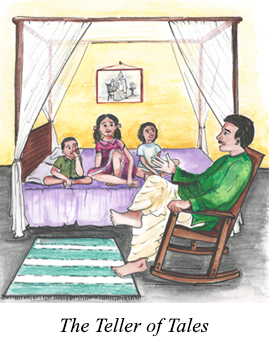
Leela and Bela had a cousin brother, Ramachandra who was an avid story teller. After Partition when young members of the extended family were waiting to start a new life, Uncle Ramachandra used to regale his nieces and nephews with folk tales. These story telling sessions helped the young people to lighten their mood. Each story, he would tell them, has a message. "Be brave and stay on the righteous path. Victory will eventually be yours." Since Uncle Ramachandra had experienced ordeals before coming to Calcutta from his pretty native village, his advice was convincing. He stayed with Dr Moulik and his family and travelled all over the world with them. The two nieces and one nephew used to call him "our guardian angel."
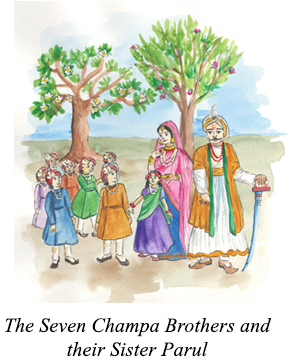
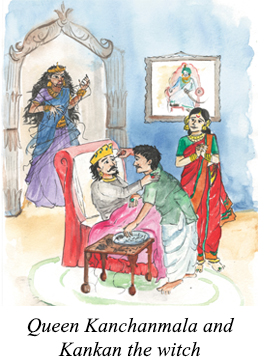
Later he translated Bengali fairy tales for children into English titled "Teller of Tales" which was published by Authors Upfront in 2020.
Father - Dr Moni Moulik, Ph.D.
Dr Moni Moulik studied at Calcutta University and then Rome University where he obtained a Ph.D. Summa con Laude in Economics. He taught Indian History and Literature at Rome University and later became foreign correspondent in Western and Central Europe for various Indian and foreign newspapers. This was a momentous time when the stage was being set for World War II. Dr Moulik travelled across Europe to describe the tension and turmoil between Britain and France on one side and the Axis powers on the other. He described the Nazi invasion of Austria and Czechoslovakia, and the Spanish Civil War. Thanks to this wide coverage and reportage both in English and Bengali dailies and journals, Indians were able to get a first-hand account of what was brewing in the West and Far East.
As official interpreter for Subhash Chandra Bose, Dr Moulik was present when Subhash Bose was in Italy and Germany to raise arms and funds for the future Indian National Army of Azad Hind Fauz.
After Independence, Dr Moni Moulik was selected to the Indian Foreign Service. He served as First Secretary in Indian Embassies in Washington, Tokyo, and was the first Director Indian Information Centre, New York, where he played a significant role in creating awareness of India's cultural and political status. The famous New Yorker magazine published a profile on him and his work at the India Information Centre. At the Indian High Commission in London, Dr Moulik, established cordial relations with important members of Fleet Street journalists and through them presented India's outlook on foreign policy in the British media.
After ten years in the Indian Foreign Service, he was offered a post as Director at the Food and Agricultural Organization. He played an important role in launching the Freedom from Hunger Campaign in 1959. This required international cooperation from FAO member states. It also involved a vast collaborative participation of economists, agronomists, irrigation engineers, nutrition experts and medical personnel to study the problems of hunger, malnutrition, and the challenge of expanding agriculture in drought prone areas where crop failure was a chronic disaster. Dr Moulik was tasked with coordinating the work of technical experts for implanting the Freedom from Hunger Campaign. When he retired at the age of sixty-two, FAO commissioned him to write a book on the Freedom from Hunger Campaign. The book was titled "Billions More to Feed." It was published by FAO in numerous languages.
Publications
For his Ph.D. thesis at Rome University, Dr Moni Moulik wrote in Italian - "Finanziera Politica Britannia in India" - or Politics of British Finance in India. It was the economic history of India under British rule from 1757 to 1947. The book was published by the celebrated Niccolo Zanichelli Publishers, who had published Galileo's famous work "Nuncio Sedra" or Starry Messengers.
After returning to India on the eve of the Second World War, he wrote and published "Italian Economy and Culture." - the first Indian to write on Italian history and culture. As Britain was at war with Italy, Dr Moulik was kept under police surveillance for his pro-Italian sympathies. In the twists and turns of destiny, it is this book which made him famous among Italians in FAO and outside.
He used to say that Saraswati Devi, the goddess of learning sent him to Rome for his own education and then again to FAO, Rome, where he earned enough to send all his three progeny, Aloka, Achala and Amal to London University.
After the untimely passing away of his wife Leela, Dr Moulik wrote two volumes of poems on her - "Twilight" and "Reveries." And later "Wounded Dreams" which was praised by the Indian Prime Minister Indira Gandhi.
When Oxford University invited the Indian High Commissioner Madam Pundit to speak, she asked Dr Moulik then serving at the Indian High Commission in London to write her speech. The book titled "Evolution of India" which is a brief political and cultural history of India was published under Madame Pundit's name by the Oxford University Press.
Dr Moulik's political and cultural travelogue written during the war years is under publication.
Dr Moni Moulik was a prolific columnist who wrote regularly for Indian and foreign newspapers in his youth.
Dr Moulik was a gifted linguist who wrote and spoke Bengali, English, Italian, French, German, and Urdu. He was proficient in Sanskrit.